
--- philosophy ---
2025.05.07
The Death of Purpose
I went into healthcare to help people, and this is about what I found when I got there.
I’ve always craved purpose. Like, in the deepest part of my being. The thing that gets me up in the morning has always been, and continues to be, the drive to help people. Even more so, I LOVE to build things that help people.
At the start of my career, healthcare felt like a logical choice. What better way to have a meaningful impact on people’s lives than to work directly within a system designed for care, compassion, and healing?
Welp… that’s where my idealism quickly met reality for the first time.

The Healthcare System Is Broken
My time working in healthcare in America made one thing abundantly clear: the system is fucked. We obsessively overextend diagnostic and reactive care, while preventive care and population health — areas that could fundamentally change and improve lives — sit in the backseat.
Profit-driven motivations distort everything. Hospitals gobble up smaller hospitals and build local monopolies. Doctors juggle multiple paid roles simultaneously, billing you for a full clinic appointment while spending five rushed minutes with you and also getting paid to be on call at the hospital across the street. Lazy, ineffective employees coast on job security, dumping their workload on underpaid and overstretched CNAs and medical assistants. Patients routinely use emergency rooms as personal outpatient clinics due to poor education, inaccessible preventive care, and addiction-driven behaviors.
And if you’re uninsured or underinsured, the system knows — and your care suffers accordingly. It’s morally repulsive and deeply depressing.

An Attempt at Purpose
In 2020, when COVID first started attacking the world, I was working at a hospital in Southeastern North Carolina. I saw an opportunity to create something meaningful: a non-profit app called StayNeighbor, connecting people directly with local resources.
After sharing the idea on Reddit, a bunch of volunteers raised their hands to help out. Talented, generous people from all backgrounds came together to build something truly useful. Proudly, I took the app to the hospital, believing naively they’d be eager to use it. Instead, I got sidelined. It turned out some physician’s son had already created a half-baked donation app, and they viewed StayNeighbor as competition.
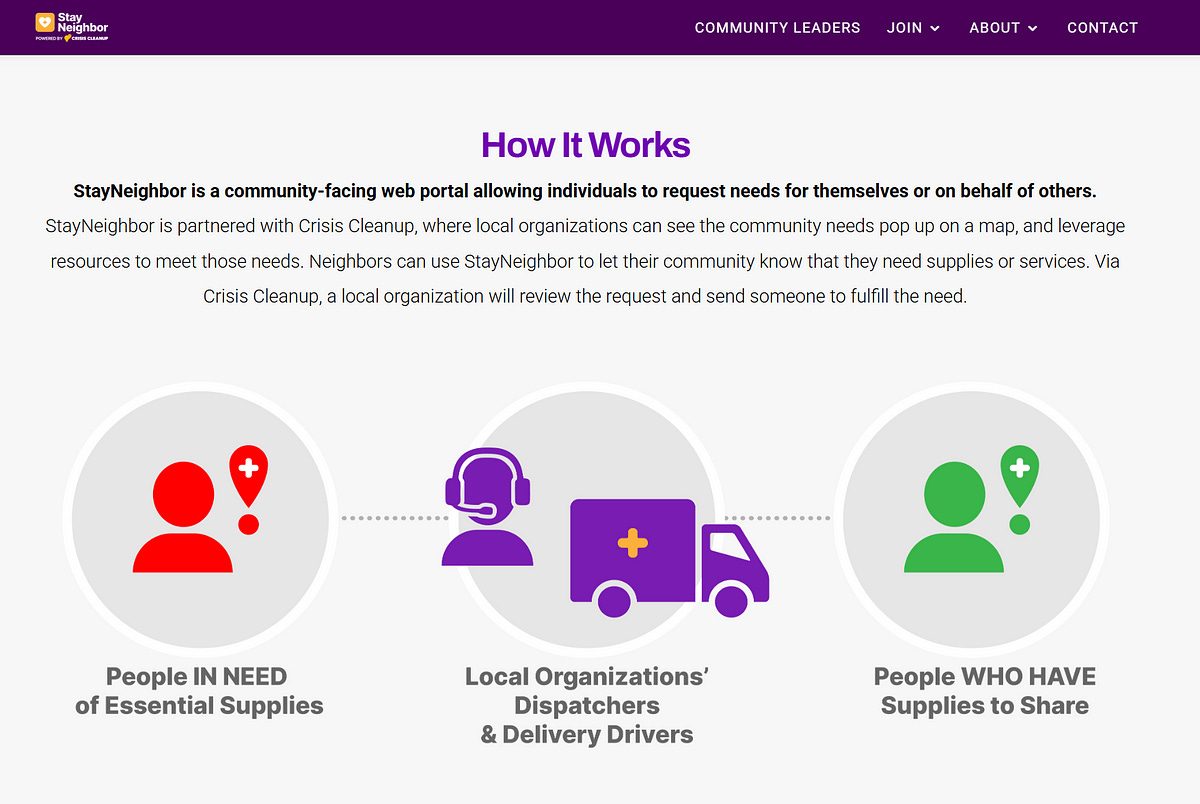
Hospital administration bluntly told me I’d be fired if I kept working on StayNeighbor during office hours. I did anyway, “after hours”. But then another nonprofit called Crisis Cleanup — led by a potentially narcissistic dude whose main goal seemed to be consolidating his own influence — stepped in and shut us down by going through the state government. Ironically, he then tried to hire me to work on the backend of Crisis Cleanup (I told him to politely take the offer and place it all the way up his ass where his head was located).
From COVID Relief to Disaster Response
I hate giving up. In fact I refuse to do so unless I absolutely have to. So, I repackaged StayNeighbor as a disaster-response app. The premise remained the same: connect vulnerable people directly to local resources, except now we were focused on doing it specifically in a disaster scenario. Sean Penn’s nonprofit, CORE, liked it a lot and hired me as their Director of Technology. We won grants (AWS Go Further, Faster & a CDPH grant), we built the thing, we piloted successfully in multiple areas.
Then came the corruption and ineptitude again. I started having some serious ethical concerns with the leadership team: financial mismanagement, ignored sexual assault allegations at COVID testing sites (specifically the Dodger’s stadium site in LA), shuttering successful community resource programs, prioritizing PR optics over human suffering, etc. (I dive deeper into CORE’s dysfunction in another blog, or you can see for yourself in this Bloomberg exposé.)
Once again, the team’s hard work became twisted, manipulated, and underused. Finding real, sustained purpose was feeling increasingly impossible.
An aside: They ended up moving forward, rebranding, and now are using the app under the name Relief Compass. It is bittersweet — I hope they are maximizing the value and using it to help people, but I know the leadership team is vain & ineffective.

Purpose, Lost
The deeper I dove into nonprofits and healthcare, the more disillusioned I became. Industries branded as “non-profit” or “not-for-profit” often turned out to be as profit-driven and ethically compromised as their for-profit counterparts. That kind of disappointment stings deeply, it made me question my career choices, it peeled off some of my motivation and optimism.
I’m not trying to make this all about myself . But if someone like me, someone intentionally seeking purpose in their work, repeatedly comes up empty-handed, I wonder how most people feel who operate in explicitly profit-driven spaces. The systemic rot in leadership, ethics, and transparency feels pervasive. It’s hard not to feel like purpose itself is dying a slow, nasty death.
Final Musings
Maybe my experience isn’t universal. Maybe I’ve just seen the darker corners of industries that could (and should) genuinely do good. But I’ve bounced around plenty of roles and domains— and haven’t found one yet that wasn’t severely lacking in true purpose.
It’s becoming increasingly clear to me that this isn’t isolated to a few bad experiences; it feels like a systemic problem. If leadership at healthcare organizations and nonprofits are so comfortable with questionable practices, I can only imagine what’s happening elsewhere.
I genuinely hope your experience is different. Maybe you’ve found pockets of authentic purpose and meaningful impact out there. And honestly, I’d love to hear about it — especially if it challenges my current perspective. I want to believe there’s hope. So please, reach out and tell me about your experiences (good or bad).
Right now, from where I stand, it feels like purpose is dying — and we desperately need to find ways to revive it.

also on Medium